




| SNo. | Scientific Name | Locality | Habitat | Basis of Record | Description | Recorded By | Record Number | Island | Source | Date |
|---|---|---|---|---|---|---|---|---|---|---|
| 1 | Cyanea macrostegia | Locality redacted. Contact Bishop Museum Botany Department for details | Wet koa- ohia forest with other native trees and a treefern, native shrub understory. | Preserved_Specimen | Unbranched; 3 cm Bd; 2m tall. Juvenile leaves from neighboring plants. | Warshauer, F.R. | 2770 | Maui | BISH | 1980-07-10 |
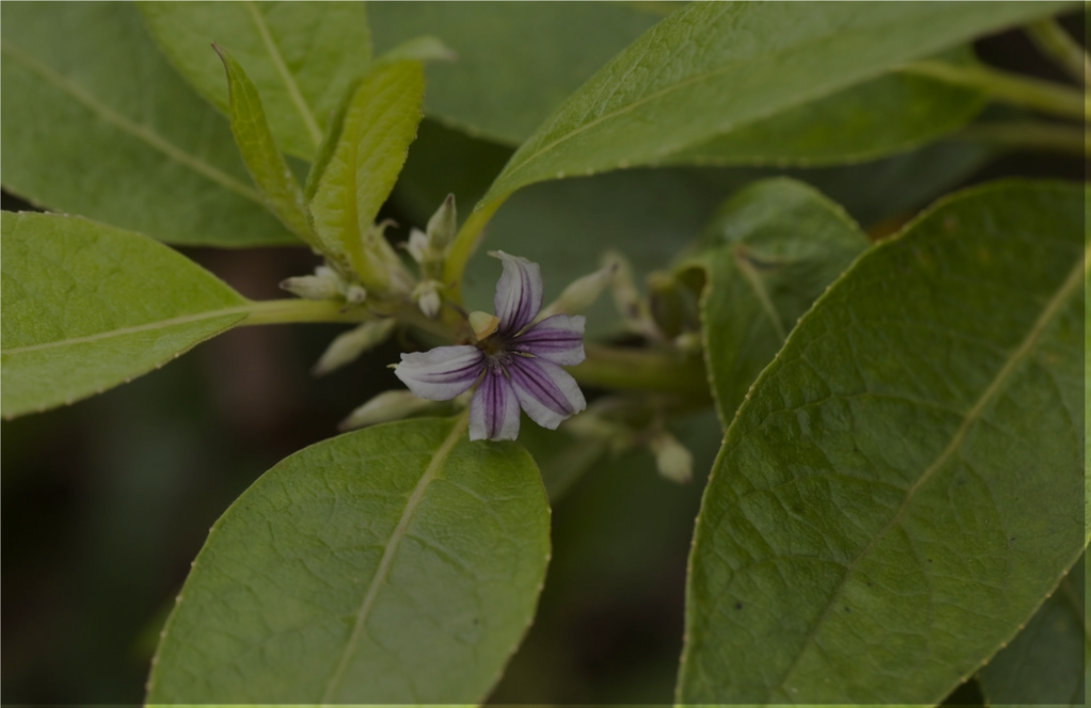
| 2 | Cyanea macrostegia | Locality redacted. Contact Bishop Museum Botany Department for details | Rain forest on ridge. | Preserved_Specimen | 1.5 m shrub, leaves pale green, flowers purplish black, within green. | St.John, H. | 21248 | Maui | BISH | 1945-08-30 |
| 3 | Cyanea macrostegia | Locality redacted. Contact Bishop Museum Botany Department for details | Scattered in wet forest. Vegetation: Metrosideros, Cheirodendron, Melicope, Myrsine, Ilex, Coprosma, Broussaisia, Cyrtandra, Phyllostegia, Stenogyne, Sadleria, Athyrium, Diplazium, Labordia, Vaccinium, Lobelia, Dryopteris, Elaphoglossum, Pipturus, Urera, Peperomia. | Preserved_Specimen | Unbranched treelets to 3m tall; latex white. | Oppenheimer, H.L. | 110614 | Maui | BISH | 2006-11-21 |
| 4 | Cyanea macrostegia | Locality redacted. Contact Bishop Museum Botany Department for details | Metrosideros ssp. Wet forest. With Coprosma pubens, Ilex anomala, Dicranopteris linearis, Rubus hawaiiensis, Broussaisia arguta, Sadleria, Cibotium, Cheirodendron | Preserved_Specimen | Shrub 2 meter ht with immature fruit | Perlman, S. | 23316 | Maui | BISH | 2013-03-01 |
| 5 | Cyanea macrostegia | Locality redacted. Contact Bishop Museum Botany Department for details | In wet forest. | Preserved_Specimen | Fruits purplish brown turning purplish orange when ripe, 1 1/2 - 2 1/2 cm long with 1 1/2 cm calyx lobes. Pulp bright orange with tiny brown seeds. | Hobdy, R.W. | 676 | Maui | BISH | 1979-08-23 |
| 6 | Cyanea macrostegia | Locality redacted. Contact Bishop Museum Botany Department for details | Montane Ohia Mixed Forest at 4050 ft in a drainage with tall Diplazium sandwichianum, Dryopteris acutidens, Metrosideros, Myrsine, Ilex, Psychotria, Coprosma, Broussaisia, Hedyotis, Cyrtandra spp., Peperomia spp.and Freycinetia | Preserved_Specimen | Welton, P. | 1579 | Maui | BISH | 1992-10-10 | |
| 7 | Cyanea macrostegia | Locality redacted. Contact Bishop Museum Botany Department for details | On slopes of Waihoi crater. With Broussaisia, Coprosma, Metrosideros, Cheirodendron, etc. | Preserved_Specimen | Flowers dark purple - almost black. Leaves pale green. | Harrison, B. | 201 | Maui | BISH | 1972-10-22 |
| 8 | Cyanea macrostegia | Locality redacted. Contact Bishop Museum Botany Department for details | Rain forest. | Preserved_Specimen | Tam, A. | 22245 | Maui | BISH | 1952-03-30 | |
| 9 | Cyanea macrostegia | Locality redacted. Contact Bishop Museum Botany Department for details | Occasional in Metrosideros Wet Forest | Preserved_Specimen | Unbranched treelets, juvenile leaves shallowly lobed, latex white, corolla dark purple. | Oppenheimer, H.L. | 51402 | Maui | BISH | 2014-05-01 |
| 10 | Cyanea macrostegia | Locality redacted. Contact Bishop Museum Botany Department for details | In wet forest. | Preserved_Specimen | Fruits purplish brown turning purplish orange when ripe, 1 1/2 - 2 1/2 cm long with 1 1/2 cm calyx lobes. Pulp bright orange with tiny brown seeds. | Hobdy, R.W. | 676 | Maui | BISH | 1979-08-23 |
| 11 | Cyanea macrostegia | Locality redacted. Contact Bishop Museum Botany Department for details | Vegetation: Metrosideros, Cheirodendron, Perrottetia, Kadua, Coprosma, Dicranopteris, Diplopterygium, Diplazium, Cibotium, Sadleria, Pipturus, Smilax, Bidens, Machaerina, Rhynchospora, Scaevola, Eragrostis, Deschampsia, Peperomia. | Preserved_Specimen | Occasional, distinct form in this area. Unbranched to 1.75m tall, Leaves somewhat glossy above, juveniles not lobed. Differs from C. macrostegia in the smaller fruit without persistent sepals, and glossier adaxial leaves- a feature not readily apparent in the dried specimen. | Oppenheimer, H.L. | 41412 | Maui | BISH | 2014-04-16 |
| 12 | Cyanea macrostegia | Locality redacted. Contact Bishop Museum Botany Department for details | Wet ohia forest with other native trees and a native shrub-matted fern understory. Growing on gulch wall. | Preserved_Specimen | Leaves spiral. | Higashino, P.K. | 9082 | Maui | BISH | 1980-05-31 |
| 13 | Cyanea macrostegia | Locality redacted. Contact Bishop Museum Botany Department for details | Rain forest. | Preserved_Specimen | Peduncle green; pedicel & calyx (except for green rim of lobes) dark purple but with white pubescence. | Degener, O. | 22067 | Maui | BISH | 1952-03-09 |
| 14 | Cyanea macrostegia | Locality redacted. Contact Bishop Museum Botany Department for details | Wet `ohi`a forest with other native trees and a treefern and native shrub understory. | Preserved_Specimen | Higashino, P.K. | 9401 | Maui | BISH | 1980-07-21 | |
| 15 | Cyanea macrostegia | Locality redacted. Contact Bishop Museum Botany Department for details | Plants on steep stream banks. | Preserved_Specimen | 2 m tall, latex white; fruits orange, persistent; calyx lobes green. | Lamoureux, C.H. | 3880 | Maui | BISH | 1967-08-06 |
| 16 | Cyanea macrostegia | Locality redacted. Contact Bishop Museum Botany Department for details | Wet ohia forest with other native trees and a treefern and native shrub understory. | Preserved_Specimen | 1.3m tall. Corolla purple, inner corolla white. | Higashino, P.K. | 9302 | Maui | BISH | 1980-06-29 |
| 17 | Cyanea macrostegia | Locality redacted. Contact Bishop Museum Botany Department for details | Metrosideros montane wet forest. With Broussaisia arguta, Perottetia sandwicensis, Diplazium sandwichianum, Dubautia plantaginea, Kadua affinis, Phyllostegia ambigua, Antidesma platyphylla, Clermontia micrantha, Pipturus albidus, Ch | Preserved_Specimen | Scattered common shrub 4-5 ft ht with purple | Perlman, S. | 21639 | Maui | BISH | 2009-05-19 |
| 18 | Cyanea macrostegia | Locality redacted. Contact Bishop Museum Botany Department for details | Wet `ohi`a forest with other native trees and a treefern and native shrub understory. | Preserved_Specimen | 1-2.5 m tall. Flower purple. | Higashino, P.K. | 9485 | Maui | BISH | 1980-08-16 |
| 19 | Cyanea macrostegia | Locality redacted. Contact Bishop Museum Botany Department for details | Wet ohia forest with other native trees and a treefern and native shrub understory. In partial shade on rolling ground. | Preserved_Specimen | Stem 4cm dia; 135cm tall. Infloresecence buds in leaf axils; corolla hirsute; 3-4 cm long peduncle w/ 3-5 buds. | Warshauer, F.R. | 2639 | Maui | BISH | 1980-06-14 |
| 20 | Cyanea macrostegia | Locality redacted. Contact Bishop Museum Botany Department for details | Beginning of boggy terrain, with Lobelia gaudichaudii, stunted specimens of Metrosideros polymorpha, sedges, Broussaisia arguta. | Preserved_Specimen | Usually unbranced rosette plant to 4 or 5 feet, succulent. Fls. deep purple | Carlquist, S. | 2146 | Maui | BISH | 1966-08-10 |
| 21 | Cyanea macrostegia | Locality redacted. Contact Bishop Museum Botany Department for details | Native montane bog | Preserved_Specimen | Flowering with flower bundles harboring many insects. Long leaves (over length of forearm). Multiple plants | Carter, I. | 37 | Maui | BISH | 2000-07-23 |
| 22 | Cyanea macrostegia | Locality redacted. Contact Bishop Museum Botany Department for details | In Metrosideros-Cheirodendron trigynum wet forest with Pipturus albidus, Clermontia micrantha, Cyanea scabra, Wikstroemia, Sadleria cyatheoides, Dubautia plantaginea, Cibotium, Dicranopteris linearis, Psychotria, Broussaisia arguta, Bidens conjuncta, Labordia hedyosmifolia, Machaerina angustifolia. | Preserved_Specimen | Shrubs 1 - 2 meters high with fls,; fl color dark purple outside, white inside corolla. | Perlman, S. | 21250 | Maui | BISH | 2008-11-06 |
| 23 | Cyanea macrostegia | Locality redacted. Contact Bishop Museum Botany Department for details | shady gulch | Preserved_Specimen | 6-8 ft. | Hobdy, R.W. | 953 | Maui | BISH | 1980-11-01 |
| 24 | Cyanea macrostegia | Locality redacted. Contact Bishop Museum Botany Department for details | Native rainforest. On steep slope in wet gulch | Preserved_Specimen | 3 ft, adult no spines on leaves, young shoot has many spines/thorns. Purple flower, open, purple and green seapals | Carter, I. | 22 | Maui | BISH | 2000-06-20 |
| 25 | Cyanea macrostegia | Locality redacted. Contact Bishop Museum Botany Department for details | mesic forest | Preserved_Specimen | shrub to 2 m | Annable, C.R. | 3862 | Maui | BISH | 1998-03-05 |
| 26 | Cyanea macrostegia | Locality redacted. Contact Bishop Museum Botany Department for details | Wet ohia forest with other native trees and a treefern and native shrub understory. | Preserved_Specimen | 3 cm Bd; 1.3m tall. | Warshauer, F.R. | 2919 | Maui | BISH | 1980-07-28 |
| 27 | Cyanea macrostegia | Locality redacted. Contact Bishop Museum Botany Department for details | Closed wet forest on thin mud soil, sides of steep gulches, NE slope | Preserved_Specimen | Stem 10-20 ft tall flowers fleshy, outside of corolla deep red, inside white. | Baldwin, P.H. | 11 | Maui | BISH | 1943-11-20 |
| 28 | Cyanea macrostegia | Locality redacted. Contact Bishop Museum Botany Department for details | Vegetation: Metrosideros, Coprosma, Dodonaea, Kadua, Freycinetia, Perrottetia, Myrsine, Dubautia, Clermontia, Bidens, Nothocestrum, Sadleria, Xylosma, Diplazium, Touchardia, Pipturus, Boehmeria, Cyrtandra. | Preserved_Specimen | Common, thousands of plants observed throughout valley over 3000ft., to 3m tall. Two types, this one with long, green undulate bracts and sepals, and the other with much shorter, triangular, purple sepals. | Oppenheimer, H.L. | 120812 | Maui | BISH | 2008-12-03 |
| 29 | Cyanea macrostegia | Locality redacted. Contact Bishop Museum Botany Department for details | In shady understory. | Preserved_Specimen | Large robust plants. | Hobdy, R.W. | 918 | Maui | BISH | 1980-10-16 |
| 30 | Cyanea macrostegia | Locality redacted. Contact Bishop Museum Botany Department for details | Montane Wet Shrubland at 4050 ft under a Metrosideros canopy with Myrsine, Coprosma, Hedyotis, Broussaisia, Psychotria, Ilex, Cyrtandra and a diversity of native ferns | Preserved_Specimen | Welton, P. | 1282 | Maui | BISH | 1991-08-27 | |
| 31 | Cyanea macrostegia | Locality redacted. Contact Bishop Museum Botany Department for details | In dense sphagnum forest. | Preserved_Specimen | Rock, J.F.C. | Maui | BISH | 1911-09-01 | ||
| 32 | Cyanea macrostegia | Locality redacted. Contact Bishop Museum Botany Department for details | Preserved_Specimen | Plant 5 ft. tall, calyx and corolla purple. | Higashino, P.K. | 1291 | Maui | BISH | 1976-01-03 | |
| 33 | Cyanea macrostegia | Locality redacted. Contact Bishop Museum Botany Department for details | Preserved_Specimen | 3.5-4 ft. high, great globular head of flowers. | Forbes, C.N. | 106 | Maui | BISH | 1910-06-01 | |
| 34 | Cyanea macrostegia | Locality redacted. Contact Bishop Museum Botany Department for details | Preserved_Specimen | Erect tufted plant. Stem with much pith little wood. No open flowers. Calyx of buds far larger than corolla. Calyx 3/8 - 1. Corolla 3/4 as long as calyx. | Gillett, G.W. | 1783 | Maui | BISH | 1965-06-21 | |
| 35 | Cyanea macrostegia | Locality redacted. Contact Bishop Museum Botany Department for details | Preserved_Specimen | Tree 4 ft 3 in high, circ. 4 in high; bottom 1/2 of stem very thorny. | Munro, G.C. | 808 | Maui | BISH | 1928-02-19 | |
| 36 | Cyanea macrostegia | Locality redacted. Contact Bishop Museum Botany Department for details | Preserved_Specimen | corolla deep purple outside, white inside | Warshauer, F.R. | 3035 | Maui | BISH | 1980-08-19 | |
| 37 | Cyanea macrostegia | Locality redacted. Contact Bishop Museum Botany Department for details | With Broussaisia, Astelia, and Vaccinium under Metrosideros and Pelea sp. | Preserved_Specimen | Harrison, B. | 548 | Maui | BISH | 1973-11-18 | |
| 38 | Cyanea macrostegia | Locality redacted. Contact Bishop Museum Botany Department for details | Preserved_Specimen | 4 ft high, another sterile one 12 ft high; lvs rather rough, coarse, & reticulated; corolla dark purple except 2 plus or minus cm at tip which is greenish white; calyx light green. the lopes troughed at tip. | Forbes, C.N. | 2435 | Maui | BISH | 1920-05-21 | |
| 39 | Cyanea macrostegia | Locality redacted. Contact Bishop Museum Botany Department for details | Preserved_Specimen | Gillett, G.W. | 2443 | Maui | BISH | 1972-08-07 | ||
| 40 | Cyanea macrostegia | Locality redacted. Contact Bishop Museum Botany Department for details | Preserved_Specimen | Rock, J.F.C. | 10262 | Maui | BISH | 1911-05-01 | ||
| 41 | Cyanea macrostegia | Locality redacted. Contact Bishop Museum Botany Department for details | Preserved_Specimen | Rock, J.F.C. | 8524 | Maui | BISH | 1910-09-01 | ||
| 42 | Cyanea macrostegia | Locality redacted. Contact Bishop Museum Botany Department for details | Preserved_Specimen | Forbes, C.N. | 2435 | Maui | BISH | 1920-05-21 | ||
| 43 | Cyanea macrostegia | Locality redacted. Contact Bishop Museum Botany Department for details | Preserved_Specimen | Forbes, C.N. | 361 | Maui | BISH | 1917-09-25 | ||
| 44 | Cyanea macrostegia | Locality redacted. Contact Bishop Museum Botany Department for details | Preserved_Specimen | Calyx red. | Rock, J.F.C. | Maui | BISH | 1911-05-01 | ||
| 45 | Cyanea macrostegia | Locality redacted. Contact Bishop Museum Botany Department for details | With Vaccinium, Metrosideros, Cheirodendron and ferns. | Preserved_Specimen | Harrison, B. | 410 | Maui | BISH | 1973-08-13 | |
| 46 | Cyanea macrostegia | Locality redacted. Contact Bishop Museum Botany Department for details | Preserved_Specimen | Shrub, 1 - 2.5 m tall | Higashino, P.K. | 9485 | Maui | BISH | 1980-08-16 | |
| 47 | Cyanea macrostegia | Locality redacted. Contact Bishop Museum Botany Department for details | Preserved_Specimen | 3 ft. high sterile. | Forbes, C.N. | 1160 | Maui | BISH | 1919-08-17 | |
| 48 | Cyanea macrostegia | Locality redacted. Contact Bishop Museum Botany Department for details | Preserved_Specimen | Forbes, C.N. | 3 | Maui | BISH | 1910-05-01 | ||
| 49 | Cyanea macrostegia | Locality redacted. Contact Bishop Museum Botany Department for details | Preserved_Specimen | Rock, J.F.C. | 16023 | Maui | BISH | 1918-09-05 | ||
| 50 | Cyanea macrostegia | Locality redacted. Contact Bishop Museum Botany Department for details | Preserved_Specimen | Rock, J.F.C. | 8792 | Maui | BISH | 1911-05-01 | ||
| 51 | Cyanea macrostegia | Locality redacted. Contact Bishop Museum Botany Department for details | Preserved_Specimen | Cranwell, L.M. | 2672 | Maui | BISH | 1938-07-26 | ||
| 52 | Cyanea macrostegia | Locality redacted. Contact Bishop Museum Botany Department for details | Preserved_Specimen | Krajina, V.J. | 620418046 | Maui | BISH | 1962-04-18 | ||
| 53 | Cyanea macrostegia | Locality redacted. Contact Bishop Museum Botany Department for details | Preserved_Specimen | Warner, R.E. | 12 | Maui | BISH | 1967-08-01 | ||
| 54 | Cyanea macrostegia | Locality redacted. Contact Bishop Museum Botany Department for details | Preserved_Specimen | Rock, J.F.C. | 8204 | Maui | BISH | 1910-08-01 | ||
| 55 | Cyanea macrostegia | Locality redacted. Contact Bishop Museum Botany Department for details | Preserved_Specimen | Hughes, G.D. | 602 | Maui | BISH | 1993-04-13 | ||
| 56 | Cyanea macrostegia | Locality redacted. Contact Bishop Museum Botany Department for details | Preserved_Specimen | Rock, J.F.C. | 8524 | Maui | BISH | 1910-09-01 | ||
| 57 | Cyanea macrostegia | Locality redacted. Contact Bishop Museum Botany Department for details | Preserved_Specimen | Rock, J.F.C. | 10264 | Maui | BISH | 1911-05-01 | ||
| 58 | Cyanea macrostegia | Locality redacted. Contact Bishop Museum Botany Department for details | Preserved_Specimen | Rock, J.F.C. | 10057 | Maui | BISH | 1912-03-01 | ||
| 59 | Cyanea macrostegia | Locality redacted. Contact Bishop Museum Botany Department for details | Preserved_Specimen | Forbes, C.N. | 249 | Maui | BISH | 1910-07-01 | ||
| 60 | Cyanea macrostegia | Locality redacted. Contact Bishop Museum Botany Department for details | Preserved_Specimen | Mitchell, A.L. | 75 | Maui | BISH | 1945-09-20 | ||
| 61 | Cyanea macrostegia | Locality redacted. Contact Bishop Museum Botany Department for details | Preserved_Specimen | Forbes, C.N. | 249 | Maui | BISH | 1910-07-01 | ||
| 62 | Cyanea macrostegia | Locality redacted. Contact Bishop Museum Botany Department for details | Preserved_Specimen | Rock, J.F.C. | 8204 | Maui | BISH | 1910-08-24 | ||
| 63 | Cyanea macrostegia | Locality redacted. Contact Bishop Museum Botany Department for details | Preserved_Specimen | Rock, J.F.C. | Maui | BISH | 1918-08-01 | |||
| 64 | Cyanea macrostegia | Locality redacted. Contact Bishop Museum Botany Department for details | Preserved_Specimen | Pyle, P. | Maui | BISH | 1980-06-24 | |||
| 65 | Cyanea macrostegia | Locality redacted. Contact Bishop Museum Botany Department for details | Preserved_Specimen | Hillebrand, W.B. | Maui | BISH | 1870-08-01 | |||
| 66 | Cyanea macrostegia | Haleakala National Park, Kipahulu Valley, dogleg | Preserved_Specimen | Anderson, S. | Maui | BISH | 1991-04-04 | |||
| 67 | Cyanea macrostegia | Locality redacted. Contact Bishop Museum Botany Department for details | Preserved_Specimen | Rock, J.F.C. | 8204 | Maui | BISH | 1910-08-24 | ||
| 68 | Cyanea macrostegia | Locality redacted. Contact Bishop Museum Botany Department for details | Preserved_Specimen | Rock, J.F.C. | 13126 | Maui | BISH | 1918-09-01 | ||
| 69 | Cyanea macrostegia | Locality redacted. Contact Bishop Museum Botany Department for details | Preserved_Specimen | Warner, R.E. | 3 | Maui | BISH | 1967-08-01 | ||
| 70 | Cyanea macrostegia | Locality redacted. Contact Bishop Museum Botany Department for details | Preserved_Specimen | Rock, J.F.C. | 10264 | Maui | BISH | 1911-05-01 | ||
| 71 | Cyanea macrostegia | Locality redacted. Contact Bishop Museum Botany Department for details | Preserved_Specimen | Forbes, C.N. | 683 | Maui | BISH | 1917-09-25 | ||
| 72 | Cyanea macrostegia | Locality redacted. Contact Bishop Museum Botany Department for details | Preserved_Specimen | Forbes, C.N. | 2591 | Maui | BISH | 1920-06-23 | ||
| 73 | Cyanea macrostegia | Locality redacted. Contact Bishop Museum Botany Department for details | Preserved_Specimen | Lydgate, J.M. | Maui | BISH | ||||
| 74 | Cyanea macrostegia | Locality redacted. Contact Bishop Museum Botany Department for details | Preserved_Specimen | Rock, J.F.C. | 8204 | Maui | BISH | 1910-08-24 | ||
| 75 | Cyanea macrostegia | Locality redacted. Contact Bishop Museum Botany Department for details | Preserved_Specimen | Forbes, C.N. | 2555 | Maui | BISH | 1920-06-18 | ||
| 76 | Cyanea macrostegia | Locality redacted. Contact Bishop Museum Botany Department for details | Preserved_Specimen | Forbes, C.N. | 54 | Maui | BISH | 1910-05-01 | ||
| 77 | Cyanea macrostegia | Locality redacted. Contact Bishop Museum Botany Department for details | Preserved_Specimen | Forbes, C.N. | 2591 | Maui | BISH | 1920-06-23 | ||
| 78 | Cyanea macrostegia | Locality redacted. Contact Bishop Museum Botany Department for details | Preserved_Specimen | Forbes, C.N. | 1652 | Maui | BISH | 1919-11-17 | ||
| 79 | Cyanea macrostegia | Locality redacted. Contact Bishop Museum Botany Department for details | Preserved_Specimen | Munro, G.C. | 421 | Maui | BISH | 1916-09-25 | ||
| 80 | Cyanea macrostegia | Locality redacted. Contact Bishop Museum Botany Department for details | Preserved_Specimen | Rock, J.F.C. | 8792 | Maui | BISH | 1911-05-01 | ||
| 81 | Cyanea macrostegia | Locality redacted. Contact Bishop Museum Botany Department for details | Preserved_Specimen | Forbes, C.N. | 106 | Maui | BISH | 1910-06-01 | ||
| 82 | Cyanea macrostegia | Locality redacted. Contact Bishop Museum Botany Department for details | Preserved_Specimen | Warner, R.E. | 3 | Maui | BISH | 1967-08-01 | ||
| 83 | Cyanea macrostegia | Locality redacted. Contact Bishop Museum Botany Department for details | Preserved_Specimen | Rock, J.F.C. | 8792 | Maui | BISH | 1911-05-01 | ||
| 84 | Cyanea macrostegia | Locality redacted. Contact Bishop Museum Botany Department for details | Preserved_Specimen | Forbes, C.N. | 54 | Maui | BISH | 1910-05-01 | ||
| 85 | Cyanea macrostegia | Locality redacted. Contact Bishop Museum Botany Department for details | Preserved_Specimen | Rock, J.F.C. | 10057 | Maui | BISH | 1912-03-01 | ||
| 86 | Cyanea macrostegia | Locality redacted. Contact Bishop Museum Botany Department for details | Preserved_Specimen | Rock, J.F.C. | 10057 | Maui | BISH | 1912-03-01 | ||
| 87 | Cyanea macrostegia | Locality redacted. Contact Bishop Museum Botany Department for details | Preserved_Specimen | Munro, G.C. | 617 | Maui | BISH | 1916-09-25 | ||
| 88 | Cyanea macrostegia | Locality redacted. Contact Bishop Museum Botany Department for details | Preserved_Specimen | Forbes, C.N. | 2591 | Maui | BISH | 1920-06-23 | ||
| 89 | Cyanea macrostegia | Locality redacted. Contact Bishop Museum Botany Department for details | Preserved_Specimen | Rock, J.F.C. | 10057 | Maui | BISH | 1912-03-01 | ||
| 90 | Cyanea macrostegia | Locality redacted. Contact Bishop Museum Botany Department for details | Preserved_Specimen | Rock, J.F.C. | 8524 | Maui | BISH | 1911-04-01 | ||
| 91 | Cyanea macrostegia | Locality redacted. Contact Bishop Museum Botany Department for details | Preserved_Specimen | Nagata, K.M. | 1924 | Maui | BISH | |||
| 92 | Cyanea macrostegia | Locality redacted. Contact Bishop Museum Botany Department for details | Preserved_Specimen | Lydgate, J.M. | Maui | BISH | ||||
| 93 | Cyanea macrostegia | Locality redacted. Contact Bishop Museum Botany Department for details | Preserved_Specimen | Rock, J.F.C. | Maui | BISH | 1918-08-01 | |||
| 94 | Cyanea macrostegia | Locality redacted. Contact Bishop Museum Botany Department for details | Preserved_Specimen | Hillebrand, W.B. | Maui | BISH | 1870-08-01 | |||
| 95 | Cyanea macrostegia | Locality redacted. Contact Bishop Museum Botany Department for details | Upper part of rain forest | Preserved_Specimen | Unbranched, 2 m. high. | Ewart III, G.R. | 92 | Maui | BISH | 1928-12-19 |
| 96 | Cyanea macrostegia | Locality redacted. Contact Bishop Museum Botany Department for details | Metrosideros-Cheirodendron-Dicranopteris wet forest with Perrottetia sandwicensis, Diplazium sandwichianum, Gunnera, Dryopteris wallichiana, Pteris excelsa, Sadleria spp, Asplenium spp, Scaevola chamissoniana, Labordia hirtella, Astelia menziesiana, Cl | Preserved_Specimen | tree, 3 m tall, unbranched, prickles on juveniles, lobes purple-black, calyx green with purple-red at base and tinged along calyx lobes | Wood, K.R. | 15048 | Maui | BISH | 2012-06-26 |
| 97 | Cyanea macrostegia | Locality redacted. Contact Bishop Museum Botany Department for details | Native montane bog | Preserved_Specimen | Single plant, past flowering | Carter, I. | 36 | Maui | BISH | 2000-07-23 |
| 98 | Cyanea macrostegia | Locality redacted. Contact Bishop Museum Botany Department for details | Dense wet forest of Metrosideros, Sadleria, Cheirodendron & Lycopodium. | Preserved_Specimen | Robust single-stemmed shrub 5' ht.; frt turbinate, dark purple becoming reddish, 12 mm long, 11.5 mm wide & shortly pilose. | Nagata, K.M. | 1931 | Maui | BISH | 1979-06-06 |
| 99 | Cyanea macrostegia | Locality redacted. Contact Bishop Museum Botany Department for details | Wet ohia forest with other native trees and a anative shrub-matted fern understory. | Preserved_Specimen | 3 cm Bd, 2 m tall; Corolla deep purple outside, white inside, fruit orange/red, 2-2.5 cm dia, oblong. | Warshauer, F.R. | 3035 | Maui | BISH | 1980-08-14 |
| 100 | Cyanea macrostegia | Locality redacted. Contact Bishop Museum Botany Department for details | Metrosideros-Acacia montane mesic forest w/ Alphitonia ponderosa, Claoxylon sandwicensis, Myrsine lanaiensis, Wikstroemia furcata, Dodonaea viscosa, Kadua affinis, Melicope barbigera, M. anisata, M. ovata, Pleomele aurea, Tetraplasandra kava | Preserved_Specimen | tree, single stem, 2.5 m tall, stem 5 cm diameter, purple flower and hypanthium | Wood, K.R. | 15640 | Maui | BISH | 2013-08-22 |
| 101 | Cyanea macrostegia | Locality redacted. Contact Bishop Museum Botany Department for details | Growing in shady gullies. Vegetation: Metrosideros polymorpha var glaberrima, Cheirodendron trigynum ssp. trigynum, Melicope clusiifolia, M. orbicularis, Myrsine lessertiana, Broussaisia arguta, Cyrtandra grayana, Cibotium glaucum, Sadleria pallida, Peperomia ssp. | Preserved_Specimen | Flowering plants having lobed leaf margins as in juveniles. | Oppenheimer, H.L. | 40027 | Maui | BISH | 2000-04-28 |
| 102 | Cyanea macrostegia | Locality redacted. Contact Bishop Museum Botany Department for details | Along unnamed stream with various ferns, Metrosideros and Vaccinium. | Preserved_Specimen | Harrison, B. | 541 | Maui | BISH | 1973-11-17 | |
| 103 | Cyanea macrostegia | East Maui, Waihoi Valley, SW corner, large deep gulch coming down from back wall, on shelf along edge of stream, O, Aspect: NW. | Wet, riparian, mostly native forest: Cheirodendron, Metrosideros, Hydrangea, Kadua axilaris, Psychotria, Sadleria pallida. | Preserved_Specimen | Patch of three mature plants, 1-2m tall, some plants, erect, others prostrate for first meter. Being taken over by ginger. | Pezzillo, Z. | 570 | Maui | BISH | 2023-11-01 |
| 104 | Cyanea macrostegia | Locality redacted. Contact Bishop Museum Botany Department for details | Wet ohia forest with other native trees and a treefern and native shrub understory. In partial shade on rolling ground. | Preserved_Specimen | Stem 4cm dia; 135cm tall. Infloresecence buds in leaf axils; corolla hirsute; 3-4 cm long peduncle w/ 3-5 buds. | Warshauer, F.R. | 2639 | Maui | BISH | 1980-06-15 |
| 105 | Cyanea macrostegia | Locality redacted. Contact Bishop Museum Botany Department for details | shady gulch | Preserved_Specimen | 6-8 ft. | Hobdy, R.W. | 953 | Maui | BISH | 1980-11-01 |
| 106 | Cyanea macrostegia | Locality redacted. Contact Bishop Museum Botany Department for details | Rain forest. | Preserved_Specimen | Tam, A. | 22245 | Maui | BISH | 1952-03-30 | |
| 107 | Cyanea macrostegia | Locality redacted. Contact Bishop Museum Botany Department for details | Upper forest. | Preserved_Specimen | Hitchcock, A.S. | 14847 | Maui | BISH | 1916-09-24 | |
| 108 | Cyanea macrostegia | Locality redacted. Contact Bishop Museum Botany Department for details | On stream floor near springs with ferns in dense wet Metrosideros/Cheirodendron/Sadleria forest. | Preserved_Specimen | Weak-stemmed suberbaceous shrub 4-7' ht.; frts red, sparingly pilose, elongate, 3 cm long, 1.6 cm diam.; each flr subtended by a bract, bract red at base, green toward apex, pilose, subulate, to 10 mm long & 2 mm wide. | Nagata, K.M. | 1930 | Maui | BISH | 1979-06-06 |
| 109 | Cyanea macrostegia | Locality redacted. Contact Bishop Museum Botany Department for details | Occasional in Metrosideros Wet Forest. | Preserved_Specimen | Erect, unbranched treelets to 1.5m tall, latex white. Extreme form with very long calyx lobes; corolla burgundy not dark purplish/black, and glabrous. Flowers axillary among the leaves. | Oppenheimer, H.L. | 61609 | Maui | BISH | 2016-06-20 |
| 110 | Cyanea macrostegia | Locality redacted. Contact Bishop Museum Botany Department for details | Wet ohia forest with other native trees and a treefern and native shrub understory. | Preserved_Specimen | 1.2m tall. Corolla lobes hirsute, purple-black outside, inside; calyx lobes long & broad. | Warshauer, F.R. | 2899 | Maui | BISH | 1980-07-26 |
| 111 | Cyanea macrostegia | Locality redacted. Contact Bishop Museum Botany Department for details | Metrosideros-Dicranopteris linearis wet forest With Sadleria spp., Pipturus albidus, Clermontia grandiflora, Dubautia plantaginea, Cyrtandra grayana, Broussaisia arguta, Coprosma foliosa, Perrottetia sandwicensis, Clermontia kakeana, Polyscias oah | Preserved_Specimen | Many scattered plants in area, with purple flowers. | Perlman, S. | 23967 | Maui | BISH | 2014-05-28 |
| 112 | Cyanea macrostegia | Locality redacted. Contact Bishop Museum Botany Department for details | In swamp. | Preserved_Specimen | Neal, M.C. | Maui | BISH | 1933-08-16 | ||
| 113 | Cyanea macrostegia | Locality redacted. Contact Bishop Museum Botany Department for details | Growing in a wet shady gulch. | Preserved_Specimen | Shrubs 1.5 m tall; adult plants showing juvenile leaf morphology common. | Oppenheimer, H.L. | 20001 | Maui | BISH | 2000-02-03 |
| 114 | Cyanea macrostegia | Locality redacted. Contact Bishop Museum Botany Department for details | Rain forest. | Preserved_Specimen | Peduncle green; pedicel & calyx (except for green rim of lobes) dark purple but with white pubescence. | Degener, O. | 22067 | Maui | BISH | 1952-03-09 |
| 115 | Cyanea macrostegia | Locality redacted. Contact Bishop Museum Botany Department for details | In wet forest. | Preserved_Specimen | Small tree. | Munro, G.C. | 739 | Maui | BISH | 1927-11-23 |
| 116 | Cyanea macrostegia | Locality redacted. Contact Bishop Museum Botany Department for details | Wet koa ohia forest with other native trees and a treefern, native shrub understory. | Preserved_Specimen | Petiole: 4.5-7 cm; blade 24-30 x10-11 cm; glab above, pubesc below, muricate slightly above and on petiole obovate, ell'c shortly accute tip, acute-round base; margin (can't read)-crenate. Peduncle & pedicles plus or minus 1.5 cm; bracts 25-30 x 4mm. Calyx lobes: 3.5-4 plus cm x 4-5 mm, tube 2.5- cm long 6-7 cm total. Corolla gone, fruit developing. | Pyle, P. | 2877 | Maui | BISH | 1980-07-22 |
| 117 | Cyanea macrostegia | Locality redacted. Contact Bishop Museum Botany Department for details | Wet ohia forest with other native trees and a treefern and native shrub understory. | Preserved_Specimen | Unbranched; 1.5 m tall. Fruit purple. | Warshauer, F.R. | 3079 | Maui | BISH | 1980-08-16 |
| 118 | Cyanea macrostegia | Locality redacted. Contact Bishop Museum Botany Department for details | Vegetation: Metrosideros, Cheirodendron, Perrottetia, Kadua, Coprosma, Dicranopteris, Diplopterygium, Diplazium, Cibotium, Sadleria, Pipturus, Smilax, Bidens, Machaerina, Rhynchospora, Scaevola, Eragrostis, Deschampsia, Peperomia. | Preserved_Specimen | Occasional, distinct form in this area. Unbranched to 1.75m tall, Leaves somewhat glossy above, juveniles not lobed; flowers among the leaves, very sticky, latex white, corolla purple. Differs from C. macrostegia in the narrower corollas, small sepals, and glossier adaxial leaves- a feature not readily apparent in the dried specimen. | Oppenheimer, H.L. | 11401 | Maui | BISH | 2014-01-16 |
| 119 | Cyanea macrostegia | Locality redacted. Contact Bishop Museum Botany Department for details | Wet ohia forest with other native trees and a native shrub-matted fern understory. | Preserved_Specimen | Pyle, P. | Maui | BISH | 1980-06-24 | ||
| 120 | Cyanea macrostegia | Locality redacted. Contact Bishop Museum Botany Department for details | On slopes of Waihoi crater. With Broussaisia, Coprosma, Metrosideros, Cheirodendron, etc. | Preserved_Specimen | Flowers dark purple - almost black. Leaves pale green. | Harrison, B. | 201 | Maui | BISH | 1972-10-23 |
| 121 | Cyanea macrostegia | Locality redacted. Contact Bishop Museum Botany Department for details | Metrosideros-Dicranopteris linearis wet forest forest. W/ Planchonella sandwicensis, Pleomeme, Urera grabra, Cyrtandra grayi, Pipturus, Perrottetia sandwicensis, Xylosma hawaiiense, Diplazium sandwhicianum, Chierodendron, Psychotria, Dubautia plantaginea | Preserved_Specimen | Scattered shrubs, 2-3 meter ht with purple flower | Perlman, S. | 22903 | Maui | BISH | 2012-06-06 |
| 122 | Cyanea macrostegia | Locality redacted. Contact Bishop Museum Botany Department for details | Dense wet forest of Metrosideros, Cheirodendron, Sadleria. | Preserved_Specimen | Robust, erect, single-stemmed shrub 3 1/2 ft. tall., 2 1/2 in. diam. at base. Infl. 4-7 flowered. Fruit dark purple when immature, turbinate, densely pilose. Calyx lobes succulent, stiff, dark purple w/green at edges, subulate, emarginate at apex, 14-15 mm long, 8-9 mm wide. Corolla dark purple, densely white pilose w/out, white w/in; lobes 3.5 cm long, tube to 5 cm. | Nagata, K.M. | 1924 | Maui | BISH | 1979-06-06 |
| 123 | Cyanea macrostegia | Locality redacted. Contact Bishop Museum Botany Department for details | Growing in shady gullies. Vegetation: Metrosideros polymorpha var glaberrima, Cheirodendron trigynum ssp. trigynum, Melicope clusiifolia, M. orbicularis, Myrsine lessertiana, Broussaisia arguta, Cyrtandra grayana, Cibotium glaucum, Sadleria pallida, Peperomia ssp. | Preserved_Specimen | Flowering plants having lobed leaf margins as in juveniles. | Oppenheimer, H.L. | 40027 | Maui | BISH | 2000-04-28 |
Lorem ipsum dolor sit amet, consectetur adipiscing elit, sed do eiusmod tempor incididunt ut labore et dolore magna aliqua. Ut enim ad minim veniam, quis nostrud exercitation ullamco laboris nisi ut aliquip ex ea commodo consequat. Duis aute irure dolor in reprehenderit in voluptate velit esse cillum dolore eu fugiat nulla pariatur. Excepteur sint occaecat cupidatat non proident, sunt in culpa qui officia deserunt mollit anim id est laborum.
Lorem ipsum dolor sit amet, consectetur adipiscing elit, sed do eiusmod tempor incididunt ut labore et dolore magna aliqua. Ut enim ad minim veniam, quis nostrud exercitation ullamco laboris nisi ut aliquip ex ea commodo consequat. Duis aute irure dolor in reprehenderit in voluptate velit esse cillum dolore eu fugiat nulla pariatur. Excepteur sint occaecat cupidatat non proident, sunt in culpa qui officia deserunt mollit anim id est laborum.
Lorem ipsum dolor sit amet, consectetur adipiscing elit, sed do eiusmod tempor incididunt ut labore et dolore magna aliqua. Ut enim ad minim veniam, quis nostrud exercitation ullamco laboris nisi ut aliquip ex ea commodo consequat. Duis aute irure dolor in reprehenderit in voluptate velit esse cillum dolore eu fugiat nulla pariatur. Excepteur sint occaecat cupidatat non proident, sunt in culpa qui officia deserunt mollit anim id est laborum.
Lorem ipsum dolor sit amet, consectetur adipiscing elit, sed do eiusmod tempor incididunt ut labore et dolore magna aliqua. Ut enim ad minim veniam, quis nostrud exercitation ullamco laboris nisi ut aliquip ex ea commodo consequat. Duis aute irure dolor in reprehenderit in voluptate velit esse cillum dolore eu fugiat nulla pariatur. Excepteur sint occaecat cupidatat non proident, sunt in culpa qui officia deserunt mollit anim id est laborum.
Lorem ipsum dolor sit amet, consectetur adipiscing elit, sed do eiusmod tempor incididunt ut labore et dolore magna aliqua. Ut enim ad minim veniam, quis nostrud exercitation ullamco laboris nisi ut aliquip ex ea commodo consequat. Duis aute irure dolor in reprehenderit in voluptate velit esse cillum dolore eu fugiat nulla pariatur. Excepteur sint occaecat cupidatat non proident, sunt in culpa qui officia deserunt mollit anim id est laborum.
Lorem ipsum dolor sit amet, consectetur adipiscing elit, sed do eiusmod tempor incididunt ut labore et dolore magna aliqua. Ut enim ad minim veniam, quis nostrud exercitation ullamco laboris nisi ut aliquip ex ea commodo consequat. Duis aute irure dolor in reprehenderit in voluptate velit esse cillum dolore eu fugiat nulla pariatur. Excepteur sint occaecat cupidatat non proident, sunt in culpa qui officia deserunt mollit anim id est laborum.
Thank you for your interest in submitting an image of
Select your image and leave a brief description of your photo below.